Your cart
There are no more items in your cart

Sports Cats & Downpipe Exhausts
 Exhaust Systems
 Intake & Cooling
 Suspension & Chassis
 Brakes
 Engine
 Electrics
 Fuel & Ignition
 Wheels & Tyres
 Clutch & Transmission
 Styling & Body Kits
 Accessories
 Fluids & Lubrication
 Turbos & Induction
 Cleaning & Detailing
 Service & Maintenance
 Exhaust Systems
Intake & Cooling
Suspension & Chassis
Brakes
Engine
Electrics
Fuel & Ignition
Wheels & Tyres
Clutch & Transmission
Styling & Body Kits
Accessories
Fluids & Lubrication
Turbos & Induction
Cleaning & Detailing
Service & Maintenance
Exhaust Systems
Intake & Cooling
Suspension & Chassis
Brakes
Engine
Electrics
Fuel & Ignition
Wheels & Tyres
Clutch & Transmission
Styling & Body Kits
Accessories
Fluids & Lubrication
Turbos & Induction
Cleaning & Detailing
Service & Maintenance




*subject to status, terms and conditions apply

Idealfinance is a broker and not a lender. There are risks involved in taking out a loan and you should ensure you can make all payments on time and in full; failure to do so can lead to financial difficulties and have a negative impact on your credit score

2-3 Business Days, Mainland UK

Finance your Purchase with Flexible Payment Plans
If you are unable to find or match the product you’re looking for. Please contact our Team!

With over 30 years of combined technician experience, you know your car will be in the right hands with us.

As close partners of EcoTune, APR and many more specialist dealers, you’re sure to receive only the very best car parts from us.

With our price match guarantee, we’ll match any lower prices you may find elsewhere, because we believe in putting you first.
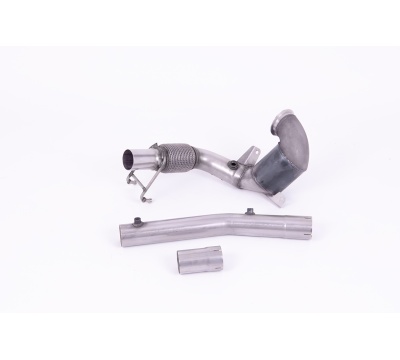
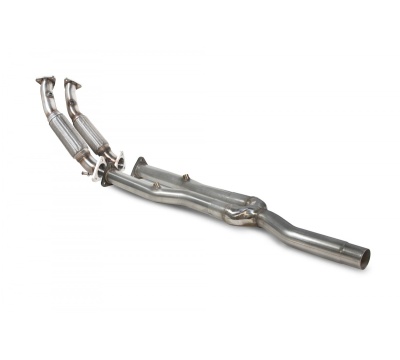
Sports Catalytic Converters (Sports Cats) are a high flow exhaust component that’s designed to reduce backpressure, filter exhaust gases to still meet emission legal requirements to pass an MOT and as a result, improve engine performance.
Catalytic converters are often constructed from stainless steel but featuring a ceramic honeycomb substrate which is ideal for its cost effectiveness and high temperature resistance. However, the honeycomb substrate in sports catalytic converters are constructed from metal instead, offering more durability, lower exhaust backpressure and they’re quicker to heat up too due to their higher thermal conductivity.
They’re also less ‘restrictive’ with often only 100-200 cells per square inch compared to stock catalytic converters which often contain 400 or more. Sports cats also enhance your vehicle’s acceleration and help produce a louder, ‘sportier’ more aggressive sound too.
Sports catalytic converters certainly make a difference to your vehicle but to ensure you make the most of installing a new sports cat it’s important to also tune your ECU to take the new addition into consideration and prevent the engine management light from being triggered.
Sports cats significantly improve exhaust gas flow which reduces engine load and allows for a faster turbo response. When you combine this with an ECU remap, there’s the potential of a significant horsepower increase in some turbocharged applications.
Sports cats help to improve performance whilst often helping to ensure your vehicle stays road legal, so they’re a great way to increase vehicle performance whilst keeping it on the road.
Yes, installing a sports cat will generally make your car louder. It’ll have a throatier, deeper, more aggressive sound compared to the stock sound. There will be a more noticeable turbo spool and prominent pops too.
But it will be a less prominent sound than a decat setup, but it will often be road legal, so it offers a good balance between increased performance and sound and ensuring legality.
To learn more about the possibilities of high-performance upgrades, take a look at our Car Remapping & Tuning Page where we break down all stage 1, 2 and 3 upgrades.
The installation of a sports cat can be legal in the UK as long as the catalytic converter has VCA Type Approval and they meet the emissions standards required by law as checked as part of your MOT.
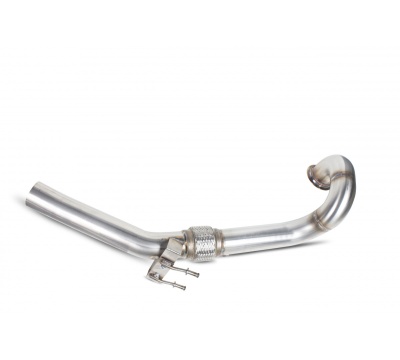
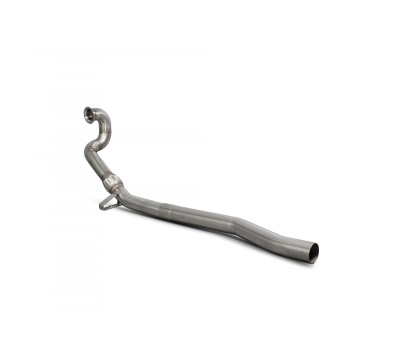
Downpipes are a vital exhaust component in turbocharged vehicles. They connect the turbocharger’s turbine housing to the rest of the exhaust system ensuring exhaust gases make their way through the system as efficiently as possible.
However the reason why many look to upgrade their downpipe is to replace the stock downpipe with one that’s wider in circumference and less restrictive. The larger diameter allows for greater space for a faster turbo spin. This increased spin is what makes a huge difference. It results in decreased turbo lag and in turn generates more spool too for greater efficiency and power output.
Whilst downpipes are essential for turbocharged vehicles to ensure they optimise exhaust flow and increase performance, they aren’t exclusively for turbocharged cars. Naturally aspirated vehicles can also take advantage of downpipes too.
Whilst they’re not needed to manage high exhaust pressure or turbo spool, many owners of naturally aspirated vehicles opt to install a downpipe as part of a larger exhaust system upgrade.
Installing a high flow downpipe into a naturally aspirated vehicle’s engine could reduce exhaust flow restrictions and as such provide a modest increase in horsepower and also provide your vehicle with a more aggressive sound too.
Yes, replacing your downpipe with a high performance alternative can help make your car faster. It helps to reduce exhaust backpressure which allows the engine to ‘breathe’ more, resulting in increased horsepower.
MOORFIELD GARAGE LIMITED is an Introducer Appointed Representative of Ideal Sales Solutions Ltd, t/a Ideal4Finance. Ideal Sales Solutions Ltd is a credit broker and not a lender (FRN 703401). Finance available subject to status. The rate offered is always provisional and will depend upon your personal circumstances, the loan amount and the term.
 Need help? We're available at 0113 250 5444 or Email us at service@moorfieldgermanmotors.co.uk